

From observatories on a Hawaiian mountaintop to catalogue offices in Paris and Cambridge, a single number has been revised upwards: 274. That is how many moons Saturn is now known to possess, after the confirmation of 128 additional satellites — the largest single expansion of any planet’s family, and a total unmatched anywhere in the solar system.
The discoveries draw on observations from the Canada-France-Hawaii Telescope, with University of British Columbia researchers central to the analysis, and have been recognised by the International Astronomical Union. The announcement has travelled quickly through the global astronomy community, where Saturn’s widening lead ends years of close rivalry with Jupiter for the informal title of most-mooned planet.
A discovery shared across borders
Modern moon-hunting is an international relay. Telescopes in Hawaii gather the images; research groups in Canada and partner institutions run the detection pipelines; the IAU’s Minor Planet Center, the sport’s global referee, validates orbits and assigns designations. No single nation could credibly maintain the catalogue alone, which is why the 274 figure carries weight from Tokyo to Berlin: it is the product of a shared verification system, not one team’s press release.
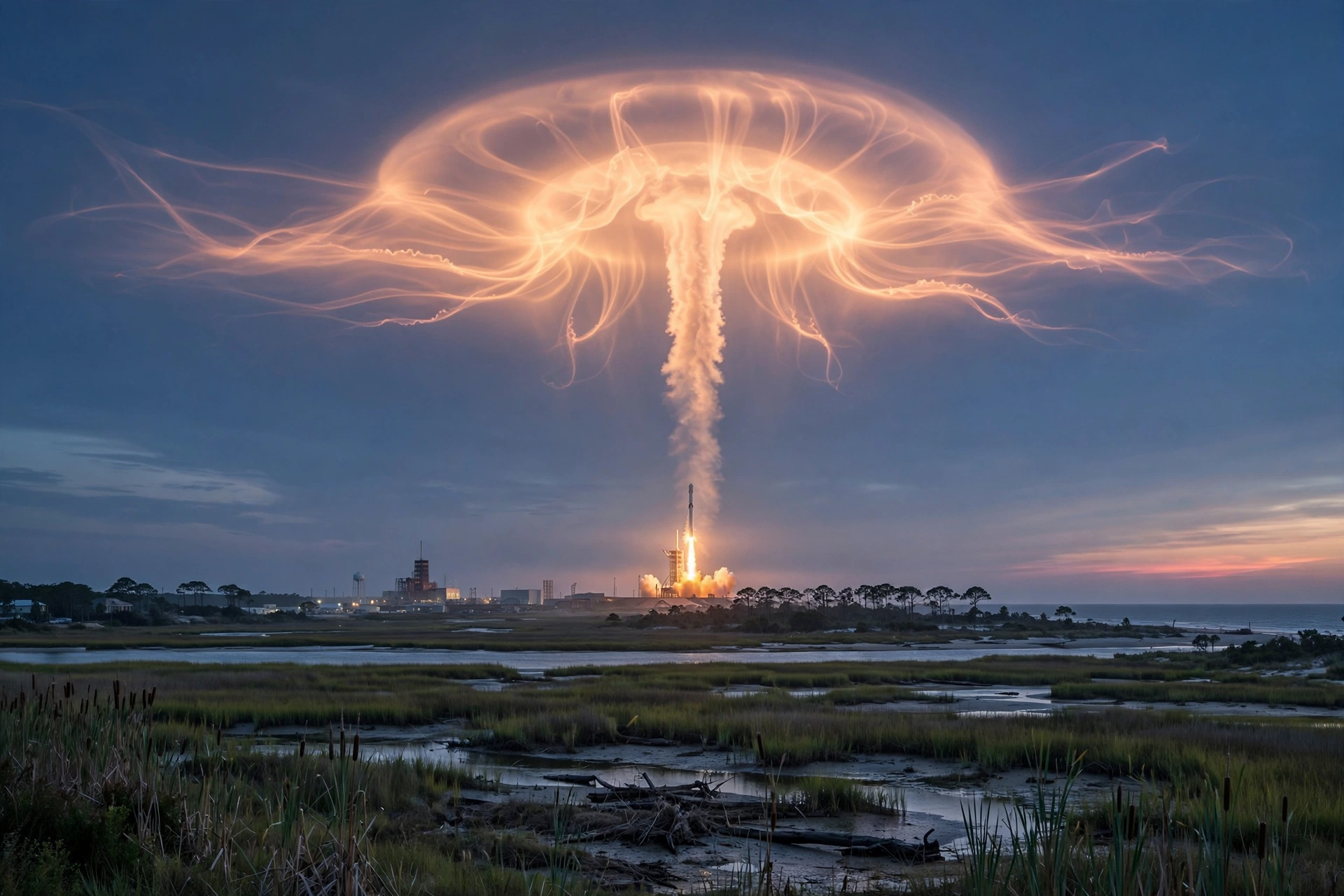
That collaborative pattern runs through much of the space coverage Globe Media News follows, from our breaking coverage of the launch cloud seen across the US East Coast to the quieter survey science behind today’s announcement.
Tiny worlds, planetary-scale significance
The new moons are small — kilometres across, not thousands — and orbit at great distances, many on retrograde paths. Far from diminishing the discovery, their size is its significance. These are captured remnants and collision fragments, preserved evidence that the young outer solar system was crowded with wandering bodies, and that Saturn’s gravity swept up a substantial share of them. Their orbital families let astronomers reconstruct impacts that happened before any life existed on Earth to witness them.
The University of British Columbia’s account of the programme, at ubc.ca, places the haul in the context of a deliberate, decade-long effort to complete the census of the giant planets’ minor moons.
Reaction from the wider scientific world
Planetary scientists beyond the survey team have treated the result as a benchmark for population studies: models of small-body capture must now reproduce a Saturnian system at least this rich. Educators face the simpler task of updating materials — a figure repeated in textbooks and museum displays worldwide has changed by 128 in a single revision, a striking reminder to students that even the solar system’s basic statistics remain live science.
For the wider public, the discovery lands alongside a run of vivid sky stories this season, reinforcing a broader truth: our neighbourhood is busier than the familiar diagrams suggest, around every planet we thought we had finished counting.
What astronomers expect next
Surveys in construction or early operation will probe fainter limits, and most specialists expect Saturn’s tally to climb further, albeit in smaller increments. Attention is also turning to characterising the families precisely enough to date their founding collisions — the step that converts a census into a chronology.
For now, the headline stands on its own merits. Saturn, the planet every child recognises by its rings, now holds a second superlative verified across the world’s observatories: 274 moons, the largest retinue in the solar system, and a standing invitation to keep looking.
The revision has also prompted a round of updates far beyond professional astronomy. Planetariums are amending scripts, publishers are correcting digital editions, and space agencies are refreshing the fact sheets that journalists and teachers rely on — a small, global administrative ripple set off by 128 very distant rocks. It is a fitting coda to the announcement: a discovery made by an international relay of telescopes, computers and cataloguers now passes, through those same networks, into classrooms and newsrooms on every continent, where Saturn’s new number will be quoted until the survey teams, inevitably, revise it again.
