

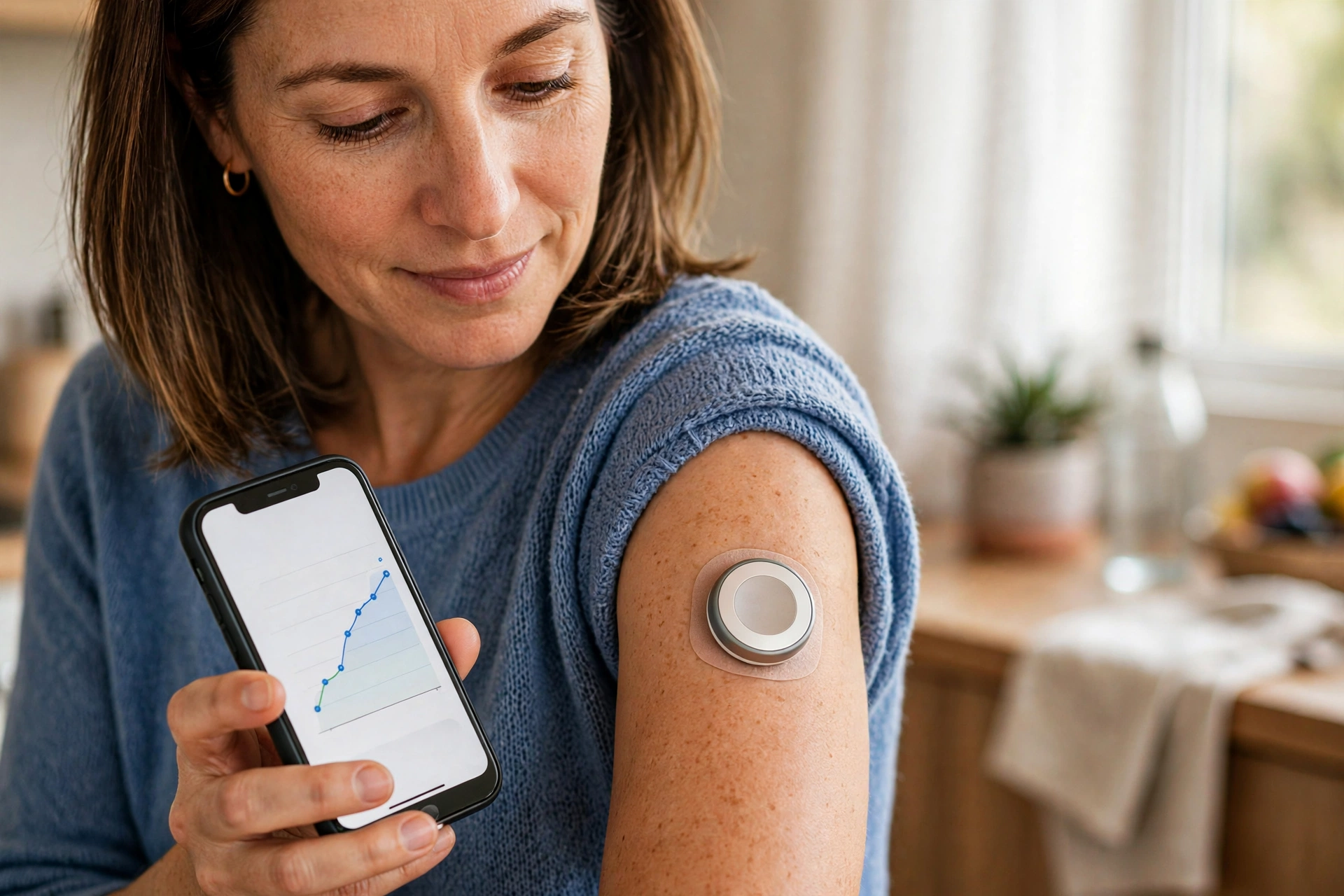
Continuous glucose monitors, the small wearable sensors long associated with insulin treatment, could help a far wider group of people with diabetes than previously assumed. In the largest clinical trial of its kind, published in the New England Journal of Medicine, adults with type 2 diabetes who do not use insulin and who wore a continuous glucose monitor spent approximately five more hours a day in their target blood sugar range than those relying on standard care.
What the Trial Found
Researchers followed adults whose type 2 diabetes was managed without insulin, the group that makes up the large majority of people living with the condition worldwide. Participants using a monitor could see their glucose readings in real time, together with trend arrows showing whether levels were rising or falling, and alerts when readings moved out of range. Over the course of the study, that simple stream of feedback translated into measurably better day-to-day control, summarised in reporting from the University of Colorado Anschutz Medical Campus.
Five extra hours a day in range is not a marginal gain. Time in range has become one of the measures clinicians watch most closely, because long periods spent too high or too low are linked to complications affecting the eyes, kidneys, nerves and heart. Moving that number by hours rather than minutes suggests the technology changes behaviour in ways that finger-prick testing, done a few times a day at most, rarely can.
Why Real-Time Feedback Changes Behaviour
The likely explanation is learning. A traditional blood test tells a patient where their glucose was at one moment. A continuous monitor shows what a particular meal, a short walk after dinner, a poor night’s sleep or a stressful morning actually did to their readings, while the memory is still fresh. Patterns that would take months to spot from a logbook become obvious within a week.
That feedback loop also makes everyday choices feel worthwhile. When a ten-minute walk visibly flattens a post-meal spike, the walk stops being abstract advice and becomes a tool the patient controls. Clinicians involved in this field say that sense of agency is often the difference between a management plan that fades after a month and new habits that survive for years.
Who Could Benefit, and What Stands in the Way
If the findings hold up in routine practice, the case for offering monitors to people with type 2 diabetes who are not on insulin becomes much stronger. The obstacles are practical rather than scientific. Cost and insurance coverage vary widely, and many health systems still reserve the devices for insulin users. Our explainer on understanding health insurance and what residents need to know shows how sharply access to modern care can depend on the details of a policy.
Access is also reshaping where people seek treatment, as international patients weigh costs and technology across borders, a trend explored in our coverage of Vietnam’s rise as a global dentistry hub. Diabetes care is following a similar pattern: as monitoring technology becomes cheaper and easier to wear, pressure grows on insurers and clinics to make it a standard part of type 2 care rather than a premium extra.
Important Caveats
The trial’s results, published through The New England Journal of Medicine, do not mean every person with type 2 diabetes needs a sensor tomorrow. Monitors produce a constant stream of data, and some patients find that stream stressful rather than empowering. Sensors also need replacing regularly, can occasionally give inaccurate readings, and work best when a care team helps patients interpret what they are seeing.
Nor does technology replace the foundations of management: appropriate medication, regular activity, sleep and diet still do most of the work. The monitor’s role is to make the effects of those choices visible, quickly enough to act on them. Specialists stress that anyone considering a device should discuss it with their own doctor, particularly if their treatment plan or other conditions might affect how readings should be interpreted.
What Patients Can Do Now
For readers managing type 2 diabetes without insulin, the practical takeaway is to raise the subject at the next appointment. Ask whether a monitor, even for a trial period of a few weeks, could reveal patterns that standard testing is missing. Ask what it would cost under your coverage, and what target range your care team wants you to aim for. A short, structured experiment often tells both patient and clinician more than months of guesswork.
The Bigger Picture
Diabetes care has been moving steadily from occasional snapshots to continuous understanding, and this trial is a milestone in that shift. Five more hours a day in a healthy range, achieved not with a new drug but with better information, underlines how much of chronic disease management is about timely feedback. If health systems can solve the cost and coverage questions, the small sensor on the arm may become as ordinary for type 2 diabetes as the blood pressure cuff is today, and millions of people could see the benefit in their daily numbers.
