

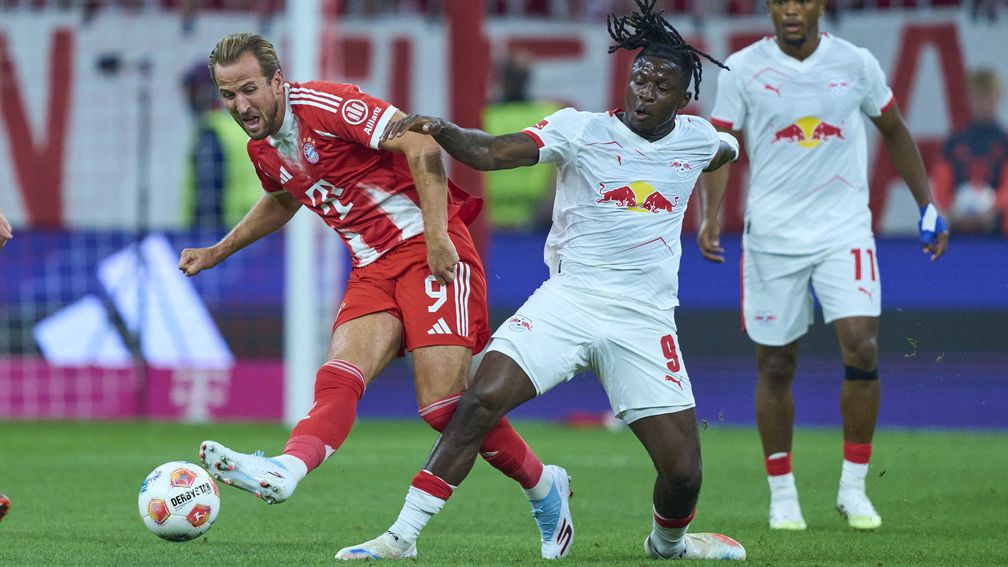
In the Bundesliga, repeated success against betting lines is rarely the result of luck alone. When the same types of matchups continue to outperform expectations across several weeks, it signals a deeper interaction between team structure, opponent profiling, and market adjustment speed. These recurring patterns emerge not at the team level alone, but often at the matchup level, where contrasting styles repeatedly distort pre-match assumptions.
Why the Market Struggles With Repeating Matchup Patterns
Odds are built to balance probability and public behavior, not to perfectly reflect tactical nuance. When a specific matchup keeps winning against the line, it often means the market is pricing historical reputation more heavily than current interaction dynamics. In the Bundesliga, this gap appears when stylistic clashes repeat before bookmakers fully recalibrate assumptions, allowing inefficiencies to persist longer than expected.
Stylistic Mismatches That Recur Across the Schedule
Certain tactical contrasts naturally reproduce similar outcomes. High-possession teams facing compact transition-focused opponents often generate predictable scorelines that defy generic pricing models. When these clashes appear multiple times within a short span, the same structural advantage can surface again and again.
The reason these mismatches persist is not stubbornness from bookmakers, but the difficulty of quantifying how styles interact under different venues, referees, and squad rotations. The surface details change weekly, while the underlying tactical friction remains stable.
Teams Frequently Appearing in Profitable Matchups
Some clubs repeatedly feature in these line-beating fixtures because their style is misunderstood rather than their quality misjudged. SC Freiburg often outperform expectations against possession-heavy opponents due to disciplined spacing and transition timing. Union Berlin regularly disrupt stronger teams through direct play and set-piece efficiency. VfL Bochum appear in profitable home matchups where intensity and tempo distort pre-match projections.
These teams do not win every week, but their specific opponent pairings have shown repeated alignment with market blind spots.
How Momentum Builds Across Consecutive Weeks
When a matchup beats the line once, the next occurrence is often still under-adjusted. Public perception reacts slowly, especially when results contradict reputation rather than reinforce it. This delay allows a short window where similar fixtures continue to deliver value before correction finally arrives. Momentum here is informational, not psychological.
When repetition accelerates market correction
Once outcomes accumulate beyond a certain threshold, pricing models adjust sharply. At that point, the same matchup that delivered value for weeks can flip into overpricing. Identifying where this inflection point lies is more important than chasing streaks blindly.
Evaluating These Matchups in Pre-Match Analysis
From a pre-match analysis perspective, recurring line wins should be treated as signals, not guarantees. Analysts often begin by breaking down how possession zones, pressing triggers, and shot locations align between the two teams involved. Only when these elements remain consistent does repetition carry analytical weight.
Before listing common indicators, it is necessary to understand that no single metric explains multi-week success. The patterns emerge from combined conditions rather than isolated numbers, which is why simplistic trend-following usually fails.
Common conditions observed in repeating line-winning matchups:
- One team consistently cedes possession but controls central transition lanes.
- Shot volume favors the opponent, but shot quality remains balanced.
- Set-piece conversion rates outperform open-play expectations.
- Venue effects amplify intensity beyond league averages.
These conditions suggest that the matchup, not the league table, is driving outcomes. Interpreting them correctly helps distinguish sustainable patterns from short-term variance.
Using Market Information Without Overreacting
When odds are reviewed across different betting environments, analysts often notice that certain fixtures move less aggressively than expected, even after repeated outcomes. In those moments, conditional evaluation becomes more important than reaction speed. During this process, references to ufabet168 may appear while navigating a football betting website or broader betting interface, not as a trigger for action, but as a comparative checkpoint to observe how pricing reflects, or fails to reflect, matchup-specific history across consecutive weeks.
Where Multi-Week Success Against the Line Breaks Down
Eventually, every recurring edge erodes. Squad rotation, tactical adjustments, or simple regression in finishing efficiency can neutralize a previously reliable matchup. Injuries to key transitional players or changes in coaching approach often end streaks abruptly. The failure point usually arrives quietly, without warning in headline results.
Summary
Bundesliga matchups that beat the odds across multiple weeks do so because structural interactions remain mispriced longer than expected. These patterns are driven by stylistic clashes, market inertia, and slow perception shifts rather than repeatable luck. Understanding when these conditions persist, and when they dissolve, is the key to interpreting multi-week success without falling into trend dependency.
