

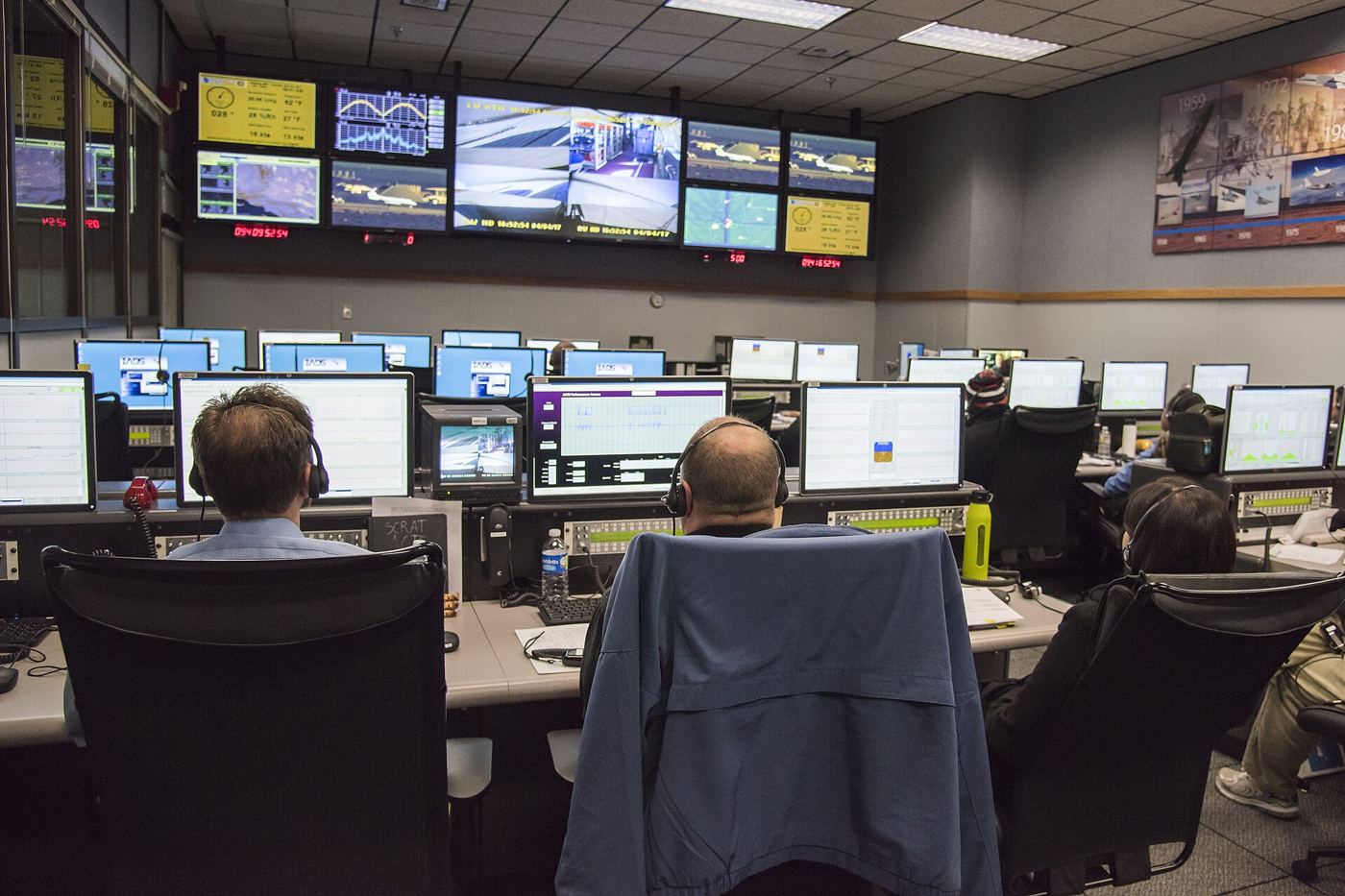
Not all computing belongs in a giant facility far away. A growing network of smaller installations, known as edge data centres, places servers close to where data is produced and decisions are needed: beside ports, factories, hospitals, farms and transport hubs. The reason is latency, the delay while information travels to a distant cloud and back. For a crane operator assisted by remote cameras, a packing line inspecting produce at speed, or a tractor uploading field data from an area with patchy connectivity, even a modest delay or a broken connection can stop work. Processing locally keeps those systems responsive and lets them keep running when the link to a central cloud fails. Edge facilities are therefore designed differently from their giant cousins. They are often modular units assembled in factories and delivered ready to install, built to run unattended for long stretches, with remote monitoring, robust cooling for dusty or warm environments and security suited to sites without permanent staff. Cloud providers and telecom companies are placing them in partnership, extending familiar cloud services outward so that developers can run the same software centrally or at the edge without rewriting it for each location.
What the Evidence Shows
The edge model raises its own management challenges, because dozens or hundreds of small sites are harder to patch, monitor and physically secure than one large campus. Operators answer with automation: standardised hardware, software updated centrally, and sensors that flag failing components before a site visit is needed. Energy supply is another local puzzle, since edge sites draw modest power individually but sit in places where grid capacity may already be tight, encouraging designs that sip electricity and, increasingly, pair with on-site solar or battery storage. Analysts expect the strongest growth where machines generate torrents of data that would be wasteful to ship wholesale to the cloud, such as video inspection and vehicle telemetry, with only summaries sent onward. The emerging architecture is therefore layered rather than either-or: instant decisions at the edge, heavier analysis in regional facilities, and long-term storage and training in the largest centres, each tier doing the work its location suits best. Reporting and analysis from sources such as IEEE Spectrum track the same developments, and specialists following edge data centres local computing say the direction is now consistent across independent lines of evidence.
The Wider Context
Adoption of edge data centres local computing follows a familiar pattern with an unfamiliar speed. Early users tolerate rough edges in exchange for advantage, mainstream users arrive when the tool disappears into existing workflows, and the market consolidates around whoever made that transition feel effortless. Vendors are racing less on raw performance now than on integration, support and trust.
What Happens Next
The realistic forecast for edge data centres local computing is steady integration rather than sudden replacement: embedded in products people already use, improving in increments, and regulated in proportion to its reach. The companies and institutions that plan on that basis, training staff and redesigning processes instead of chasing launches, are the ones the adoption data tends to vindicate. You can follow related developments in our coverage of technology.
It is also worth remembering how quickly the picture in this area has changed before. Positions that looked settled a few years ago have been revised as new data arrived, and the same humility is appropriate now. The strongest coverage of this subject, and the most useful advice, tends to come from sources that update their views openly when the facts move, rather than defending an earlier position long after it has stopped fitting the evidence available.
